What belongs to us, what makes us whole, and how do we carry it forward so that Life continues?
In October 2025, I was in São Paulo for three months of research, relationship-building and listening. I was tracking a particular practice called jongo, as well as the broader ecosystem of cultural practice that exists in Sao Paulo – particularly that shaped by Afrikan descended Brazilians. Jongo is an ancestral Afro-Brazilian cultural practice of drumming, dance and sung poetry practised in group and often after nightfall, with roots in the communities of enslaved Afrikans who worked in coffee and sugar plantations in southeastern Brazil, and their descendants.
I arrived in São Paulo with very little by way of a plan: the date of the next jongo circle in Perus and a yes to doing the work that had called me. Over 3 months, I followed wherever jongo called, attending rodas, events, and weekly study groups, travelling across São Paulo and beyond (read: long metro journeys to every side of this spread out megacity, encompassing 10 of São Paulo’s 13 lines!!). Jongo was faithful, emerging in the most unexpected of places (like my dance class, whose substitute teacher just so happened to be teaching jongo the first week I arrived!), and introducing me to new people and places. I conducted interviews, shared meals, tea, gifts and laughter, and through participating, learnt how different communities were practising cultural recovery, transmission and continuity.
But hold on, what is recovery, transmission, continuity – and why do they matter?
This project arose from experiencing the vibrancy, continuity and intergenerationality of Afro-Brazilian cultural practices in the middle of one of the world’s largest cities, São Paulo.
In 2024, I was in São Paulo for the Ecoversities Alliance Global Gathering and stayed on to reconnect with the city. I particularly desired to reconnect with jongo, a rural Afro-Brazilian group practice of drumming, dance and poetry that my host brother had first introduced me to in 2013.
I attended a festival at the Centro Cultural de São Paulo, where three drum-based Afrikan-descended practices, including jongo, were present. Experiencing jongo not only in an urban space, but at the Centro Cultural, in the moneyed centre of (white) cultural life in São Paulo, was remarkable. The group holding the circle had travelled from the interior of São Paulo.
 dancing jongo at Quilombaque in Perus with Jongo do Coreto, 2024
Following this, I participated in a monthly roda de jongo in Perus, in the north of São Paulo, held by Jongo do Coreto. This was an even more mind-blowing experience. The circle was full, and held by young people who described themselves as a jongo research and practice group. People of different genders danced together in the middle, a modification of how jongo has come to be usually danced, with a man and a woman in the centre.
I was impressed by the sense of ownership that these young people must have felt to take up a traditional rural practice and feel that it was so much theirs that they could change it to fit their contemporary reality.
And then there was the fact that this group had been practising together for more than ten years. A group of young people sustaining a traditional cultural practice for ten years is remarkable. There are so many challenges to sustaining a life of art and cultural practice that I wanted to understand how this was possible.
What had enabled these practices to be recovered, revalorised, and transmitted? What sustained groups of young people in their practice over ten, fifteen, twenty years? How did the practices travel between rural and urban spaces, and across generations, while remaining alive enough to be transformed?
Because what one has experienced in one’s body offers a depth of learning that cannot be acquired through explanation alone, I also wanted to bring cultural practitioners from East Afrika to experience what I had experienced.
I wanted them to sense the possibility of a life of dignity on the basis of their art and culture. To encounter a different valuation of the rural, the ancestral, the indigenous, against the powerful pull of the city, money, and all that comes from outside. To encounter women, young folks and queer folks exercising cultural leadership, including in ways that remake inherited practices.
The seed of O que me pertence, o que me faz inteira (what belongs to me, what makes me whole), a project unfolding over the next 4 years had been planted.
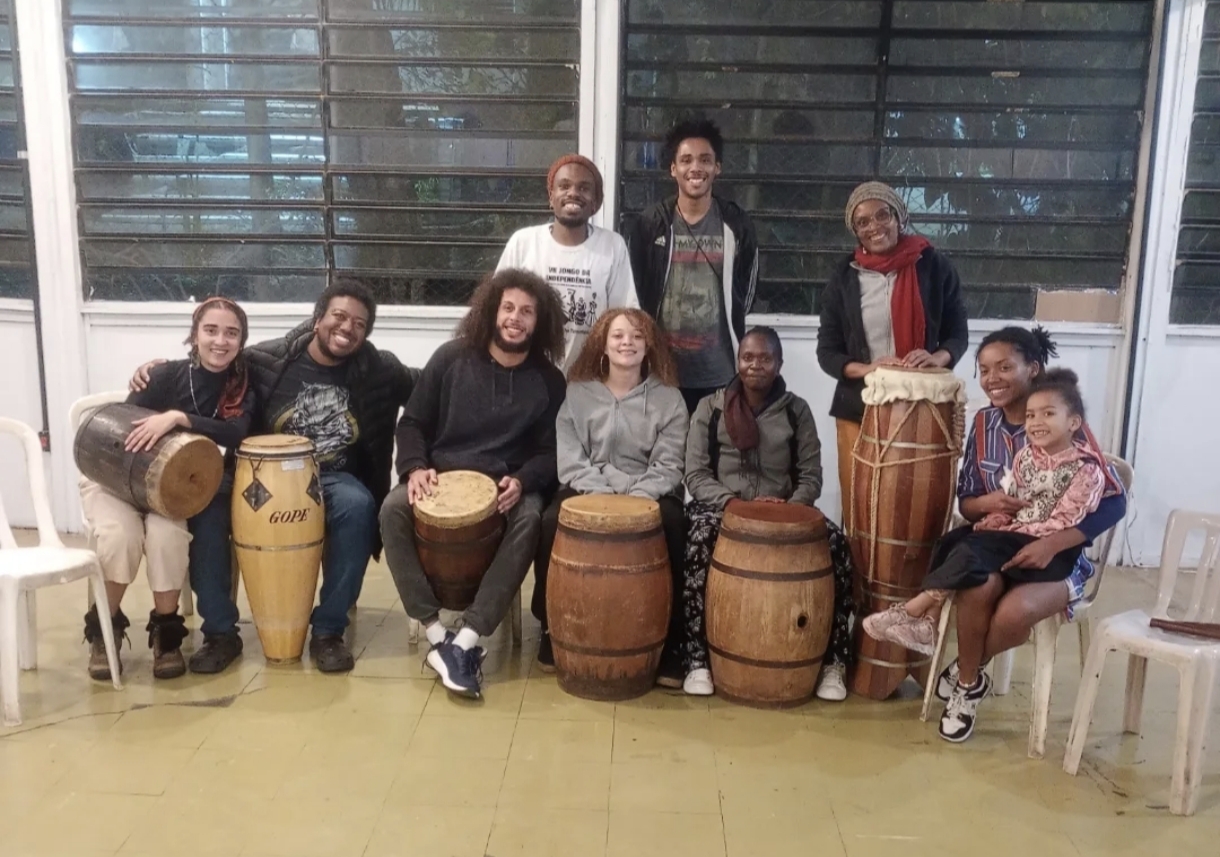
Back in São Paulo in 2025, I reconnected with Jongo do Coreto and invited the spirit of jongo that had planted the seed to lead. As I traversed the city I came in touch with other groups: Candongueiros do Campo Limpo, Jongo Filhos de Semente and Jongo do Tamandaré. In conversations, performances, learning sessions, and visits (and lots of jongo of course), what I found was not one style of jongo or one way of recovering and sustaining culture, but many, each woven through its own histories, relationships, places, struggles and possibilities.
To widen my understanding of these questions beyond jongo, I reached out to other groups approaching recovery, transmission and continuity through different cultural practices: the hip-hop groups Zumb.boys and Fragmento Urbano; Batakere, whose performance work is rooted in capoeira; Ilé Àṣẹ Ọmọ Ajunsun, a Candomblé terreiro becoming a centre of memory; and Xire de Quintal, which shares Afrikan games through a pedagogy of play.
I also became interested to know the infrastructure that made the cultural work possible. I came to know some of the cultural spaces that have sustained these practices, including Associação Cachuera, Quilombaque in Perus and Espaço Adebanke in Zona Leste.
Across these encounters, the questions grew more textured. What began as a curiosity about cultural recovery, transmission and continuity opened into recognising where questions about livelihoods, cultural policy, organising, intergenerational relationships, spaces, spirituality, the place of women, queer and young folks meet, and the extraordinary dedication and love that cultural practice demands. There is still a lot to process and metabolise from this three month journey that we will share over coming months on our website and across our socials.
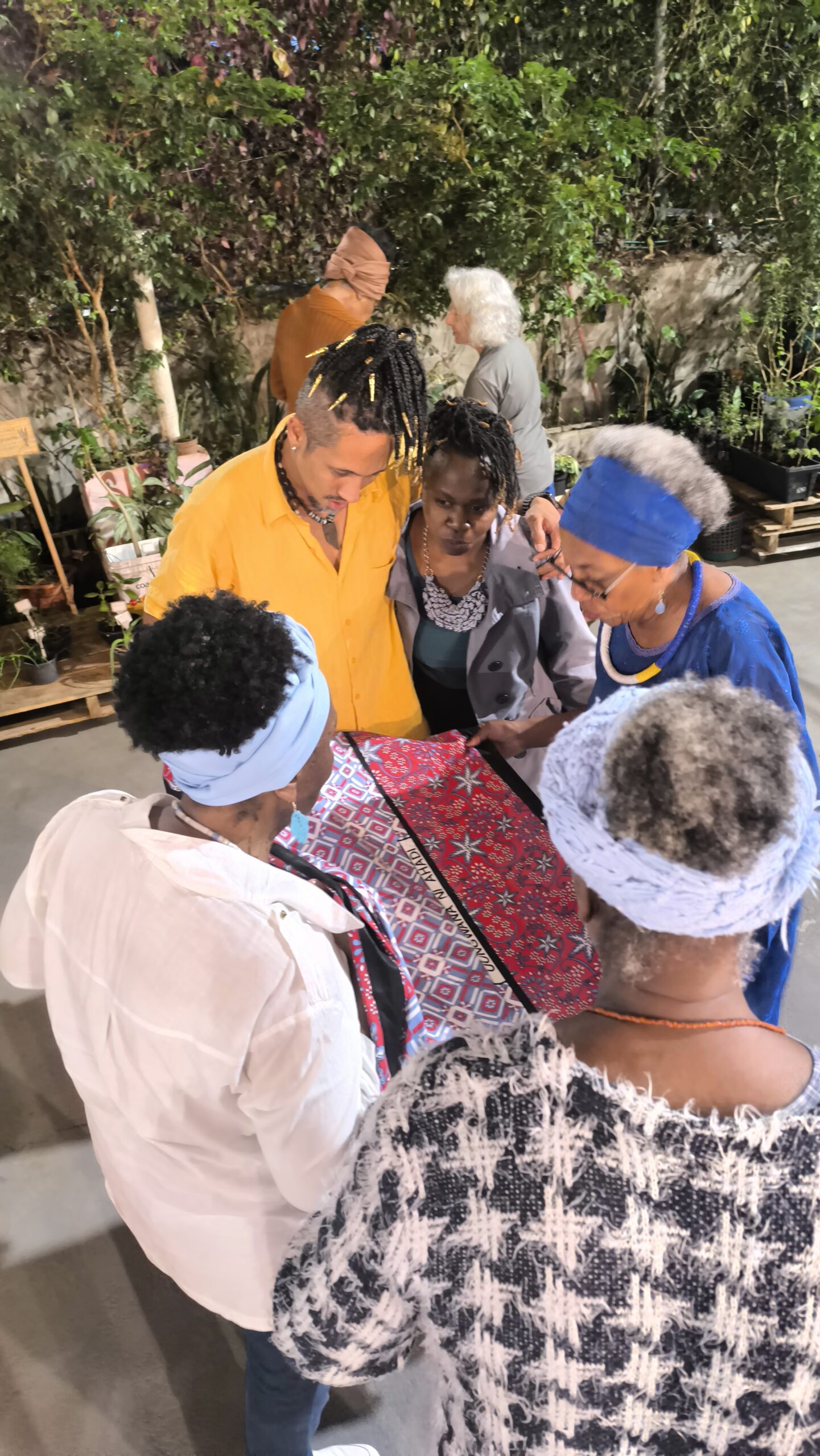
One intention of the journeys was to begin weaving relationships from which a reciprocal intergenerational and intercultural un/learning exchange between cultural practitioners in Kenya and Brazil/Pindorama might grow. This is currently in development.
We imagine a nine-month embodied un/learning journey with a cohort of younger Kenyan artists and cultural practitioners, learning alongside elders and cultural custodians from Kenya and Brazil. Together, we would travel to Brazil to learn with cultural groups sustaining ancestral practices across generations, and later receive Brazilian practitioners in Kenya, travelling together to communities engaged in their own cultural recovery work. We wish for these encounters to inspire and equip younger practitioners to undertake recovery and continuity work within their own communities, while also opening new relationships, imagination and possibilities for dignity and livelihood among the cultural custodians who have carried these practices forward.
Why Brazil/Pindorama and Kenya?
Afrika and Abya Yala (a more indigenous name for Latin America) have much to learn from one another. I first encountered just how much in a history of latin america class that I accidentally signed up for in my first year. It was an accident that turned out to be a revealing gift.
Our lands share ecological resonances, histories of colonisation, the violent interruption and suppression of indigenous and Afrikan ways of knowing, and ongoing struggles over land, identity, dignity and sovereignty. Both Afrika and Abya Yala have experienced the imposition of economic and political systems that have displaced other ways of living, and both are home to communities that have continued to sustain, recover and remake cultural worlds in the midst of these disruptions.
Yet our peoples know remarkably little of one another. Geography, language and the colonial ordering of knowledge have kept us separated, even where our histories, struggles and possibilities speak to one another.
In Kenya, colonial dispossession and the demonisation of indigenous cultural and spiritual practices severed relationships between people, land, ancestors and the knowledge that sustained life. This history continues to shape what is valued and what is disdained, including whose knowledge is considered legitimate, which livelihoods are understood as dignified, and where young people are taught to look for a good life.
The attraction of the city and its money economy has contributed to the devaluation of rural places and the cultural inheritances held there. Meanwhile, many younger urban Kenyans have limited opportunities to encounter the living cultural knowledge of their own communities, much less that of other communities in the country.
Cultural recovery is not simply a matter of preserving practices from the past. It is also a question of the value of indigenous knowledge in the present, and of our capacities to imagine and make futures from our own roots. Nor does recovering culture mean returning unquestioningly to everything that has been handed down. Our inherited practices have themselves been shaped by colonial violence, patriarchy, Christianisation and other forces. Living cultures have always changed. Part of the work of recovery is discerning what nourishes life, what has been wounded, what must be transformed, and what we wish to carry forward.
The young jongueiros in Perus offered me one vivid encounter with what is possible when people feel that a practice belongs to them, and that they belong to it.
What might become possible through more encounters of this kind between Brazilian and Kenyan cultural practitioners?
This is the invitation we are continuing to weave. Having spent three months following jongo and other cultural practices in São Paulo, we are now turning towards Kenya, seeking out communities, elders and younger practitioners already engaged in cultural recovery and renewal. These encounters will help shape the intergenerational, intercultural un/learning exchange we envision for 2028.